
Words by Peter Handcock
Table of Contents
Share This Story
Up a few steps, in a room off a corridor in Ardmore, Pennsylvania, there’s a framed piece of paper that tells the hair-raising story of how one of the world’s greatest courses almost didn’t come to be. It isn’t a routing map. It isn’t a green sketch. It’s a letter from a woman to her brother, and its entire contribution to the club is that it proves he had a boat ticket he didn’t use.
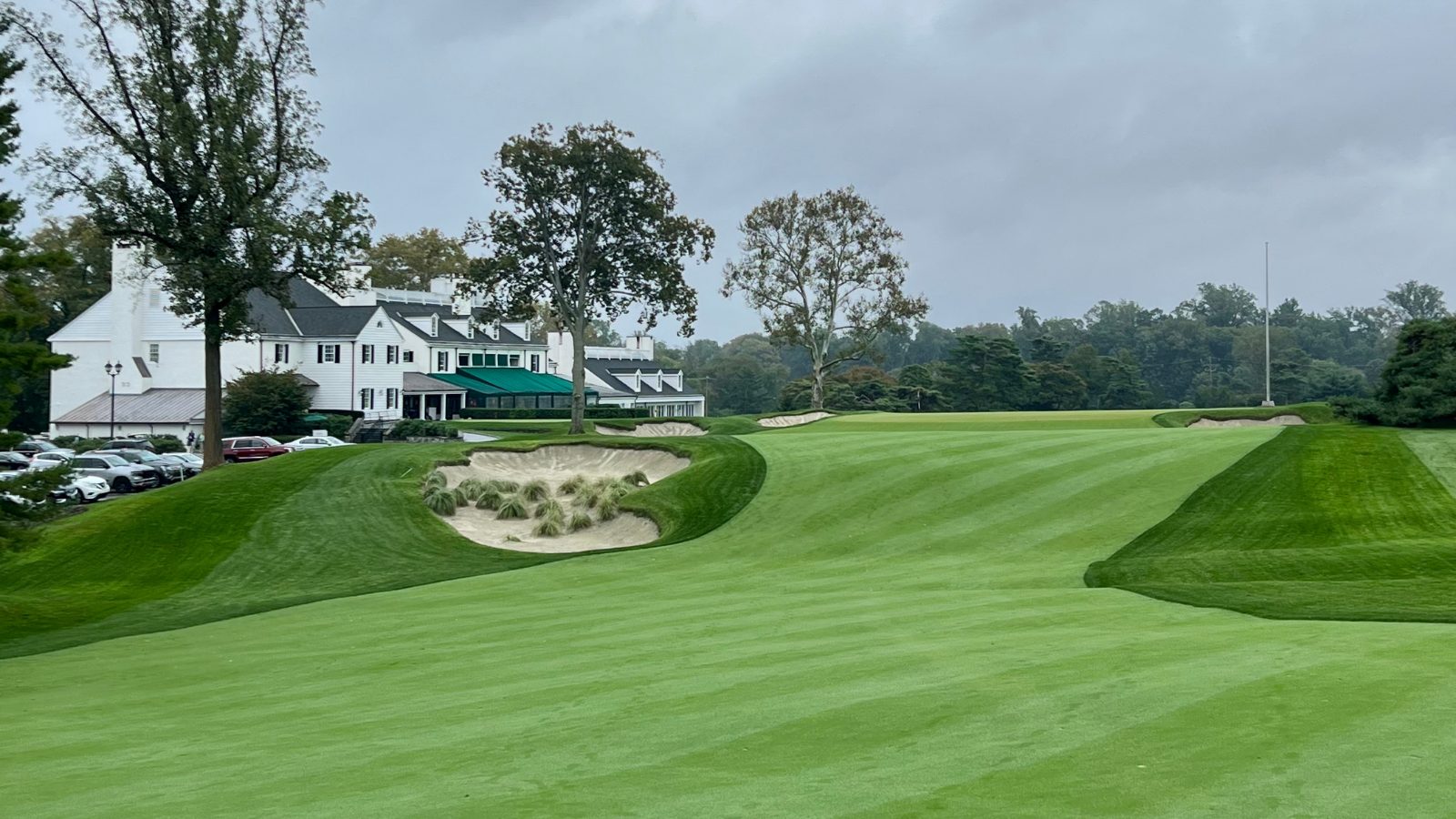
This week the 126th US Amateur is at Merion Golf Club – the seventh time the East Course has hosted one of men’s golf’s former majors – and if you’re sat in Britain wondering why you should care about a suburban Philadelphia golf club, the answer is two fold: A) because ahead of next month’s Walker Cup, the world’s best amateurs are competing at one of the games’ greatest venues, and B) because Merion as we know it, very nearly didn’t exist in its current perfect form, because of a trip to Britain 114 years ago.
A man from Haverford, wandering about
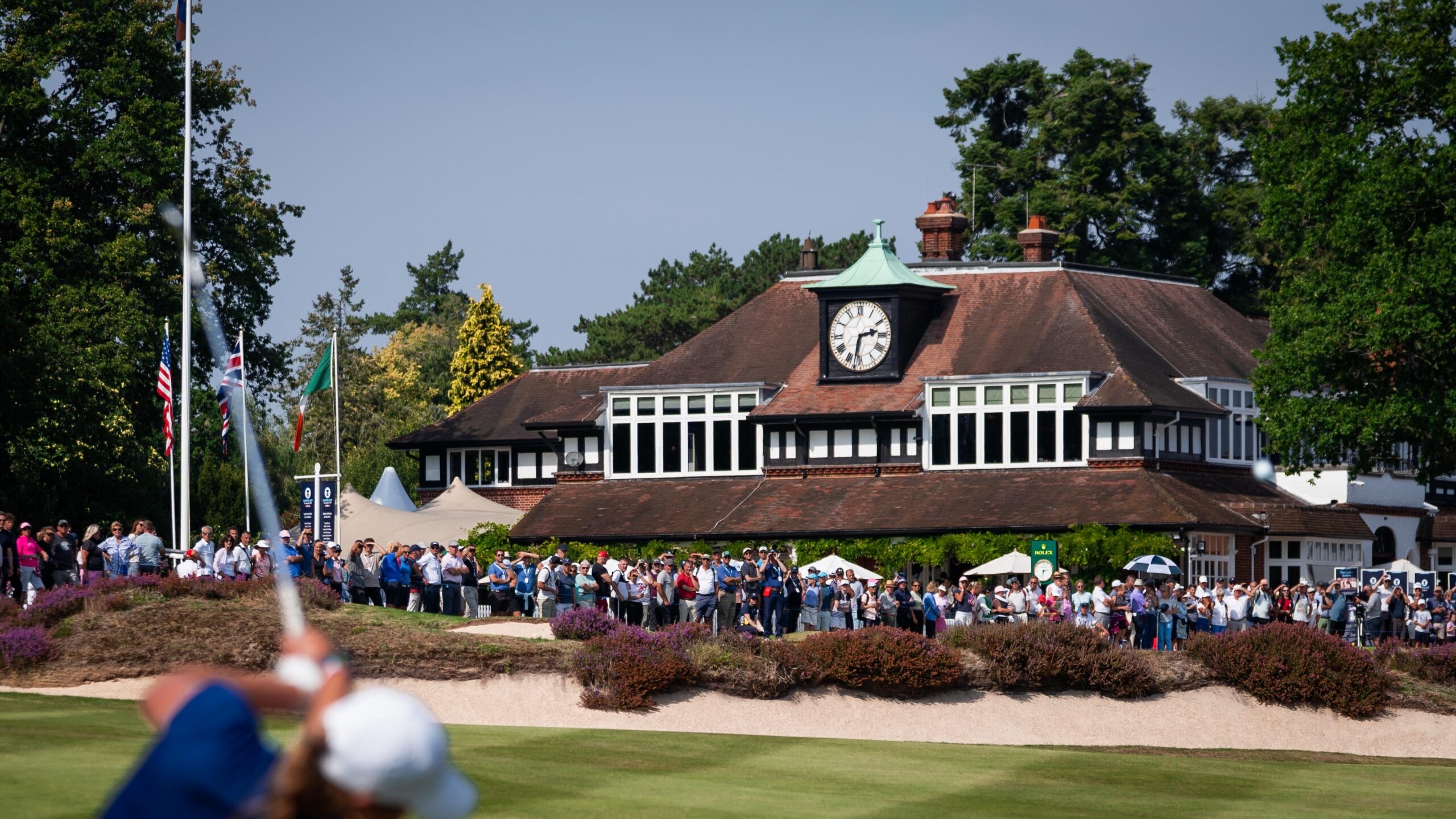
In Spring 1912, an insurance broker called Hugh Wilson is lapping the British Isles, looking at golf courses. He goes to St Andrews, Muirfield, Prestwick, Troon and North Berwick. He gets across to Hoylake and Formby, down to Deal and Prince’s, and inland to Sunningdale and Swinley. He also nips over to Portrush, and perhaps sees some others along the way. It’s fair to say he’s on the trip of a lifetime, and he is taking notes the entire way.
Few in Britain have the faintest idea who he is. The only fanfare is a two-inch newspaper clipping that amounts to an American from Haverford is over here looking at courses. Afterall, he’s just a member of a cricket club who’s been handed a job by a committee.
The story used to go that Merion sent Wilson abroad, he came home glowing with links wisdom, and then he laid out the East Course. But infact, by the time he sailed, the holes at Merion already existed – they had been routed, graded and seeded. He’d got his ideas from a trip to C.B. Macdonald’s National Golf Links, where by his own account he learned more about building golf courses in one evening than in all the years he’d spent playing them.
So the trip wasn’t a research mission for a course that didn’t exist, but instead a fact-check on one that did. Wilson was over here with a specific list of problems in his pocket, walking the originals, working out what needed improving.
The letter
He had a ticket home. Sailing on the 10th of April, 1912, from Southampton.
We know this because his sister wrote to him about it, and that letter survives in Merion’s archives – an archive John Capers III has spent years building into arguably America’s finest club museum, which Golf.com brilliantly documented just a few weeks ago. Thousands of digitised photographs and clippings. Hogan’s irons. And the receipt, more or less, for the most consequential change of plan in the history of golf course design.
Because Wilson didn’t sail. He wanted to see a few more courses, so he cancelled his passage and stayed on, and the ship he wasn’t on was the Titanic.
Now, a small note of honesty, because we like archives and we like them treated properly. The letter confirms the ticket. It does not, on its own, tell us the reason he binned it. Merion’s own history says he stayed for a few extra days; the accounts passed down from his daughter Louise say more or less the same; the golf writers who’ve dug hardest at this admit they can’t say with certainty what made him do it, and shock horror – neither can I. It simply appears that a man in the middle of the greatest golf trip of his life looked at his ticket, looked at a map of the courses he hadn’t seen yet, and thought sod it, one more week.
Every golfer reading this has had that thought. Wilson is the only one for whom it saved his life. He came home in May, alive, with a notebook.
What he did with the extra week
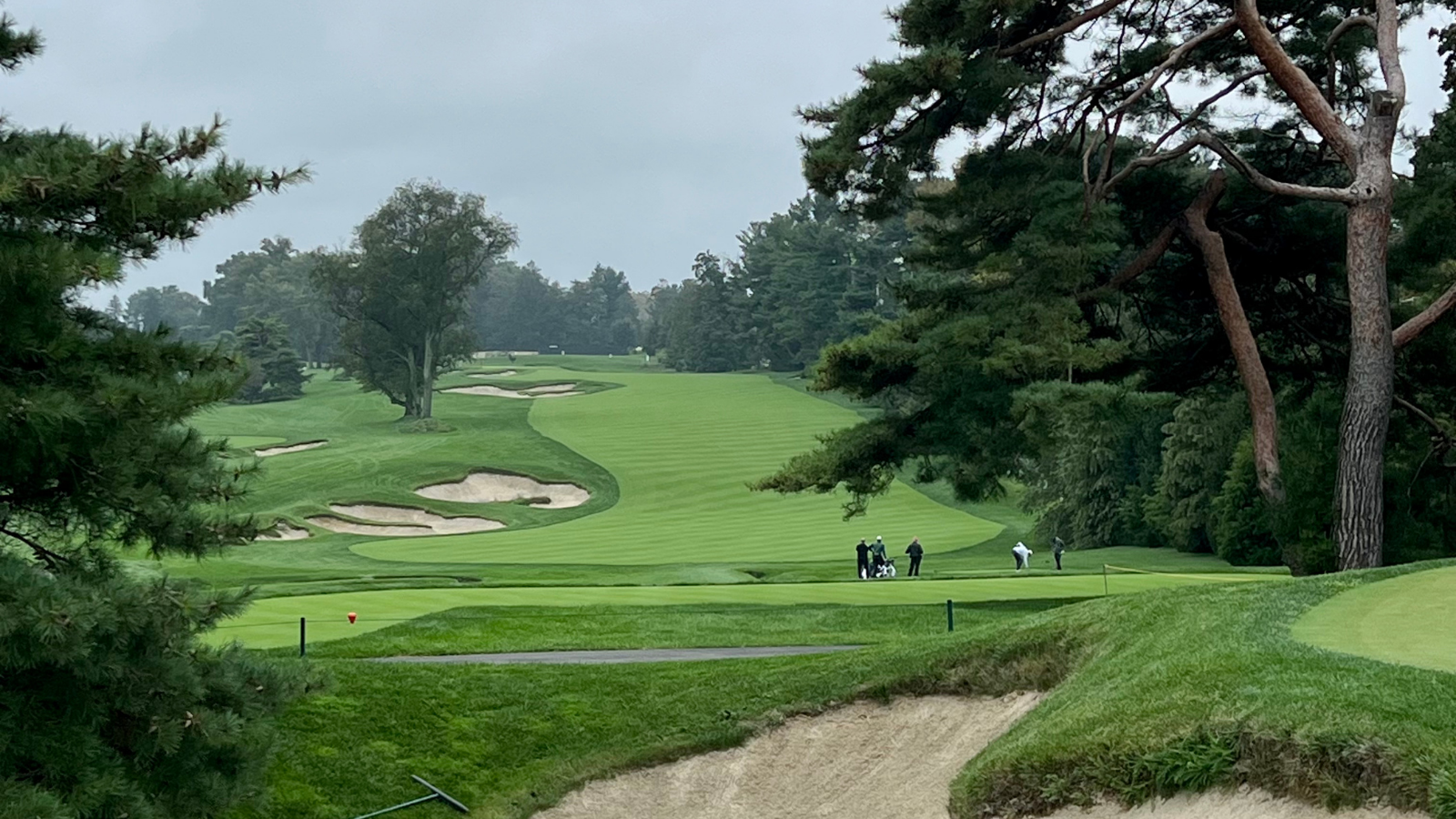
Upon Wilson’s return and alongside Merion greenkeeper William Flynn – later one of the great architects of the age – he set about the golf course with a decade of relentless, obsessive fiddling. They added something like a hundred bunkers. They rebuilt greens. They ripped up holes. In 1916 alone, ahead of the US Amateur, they crammed in circa fifty new bunkers, new tees, four rebuilt or brand-new greens and three new fairways, and somehow had the place immaculate by September.
And while British fingerprints are all over it, Tillinghast, who watched the whole thing happen and was notoriously a harsh critic, reckoned the very best holes at Merion were the ones that weren’t copied from anywhere. Wilson came to Britain, learned the grammar, and then went home and wrote his own sentences.
Why we adore it
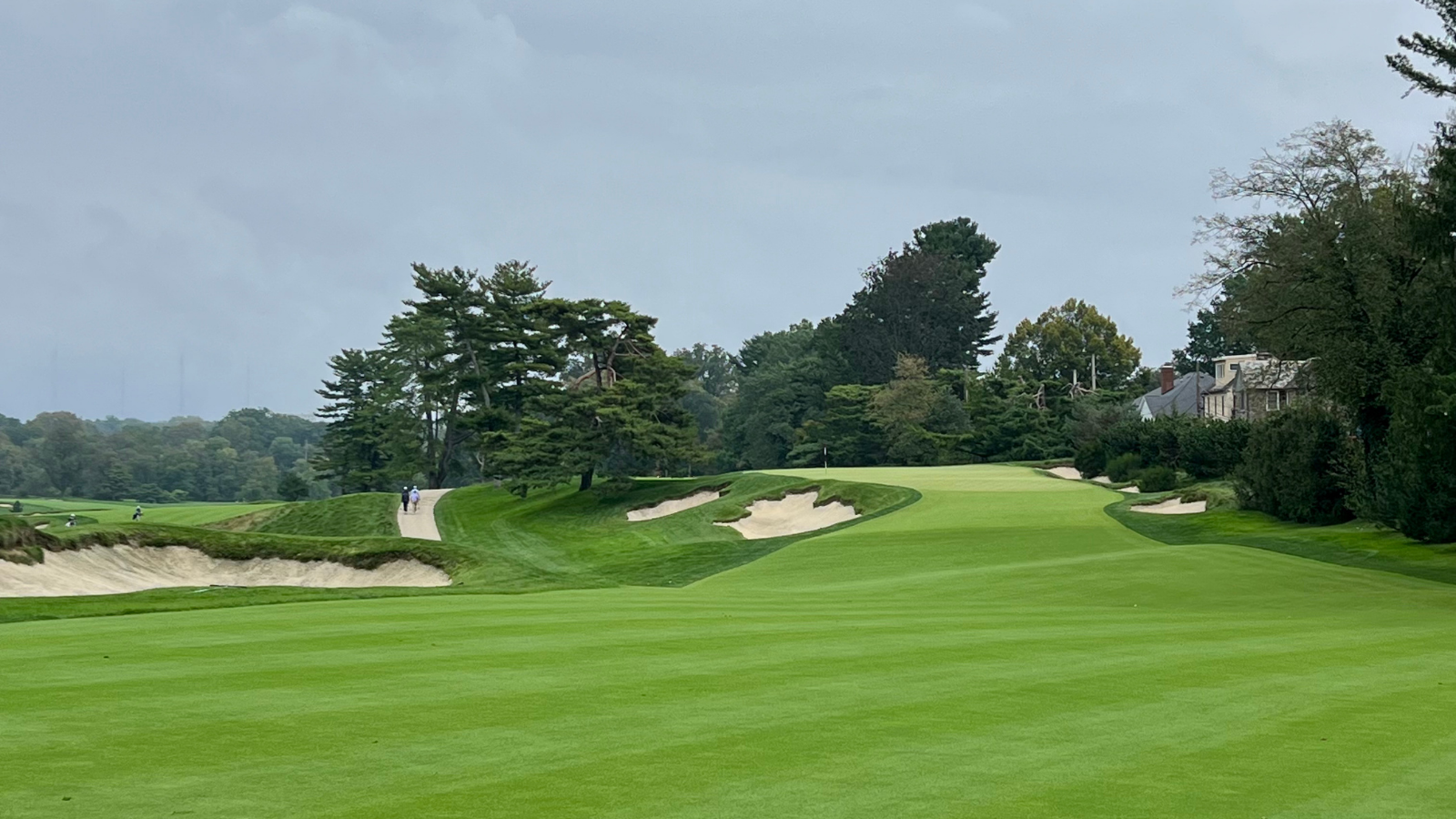
Merion East has no business being one of the world’s great golf courses, but that’s why we adore it.
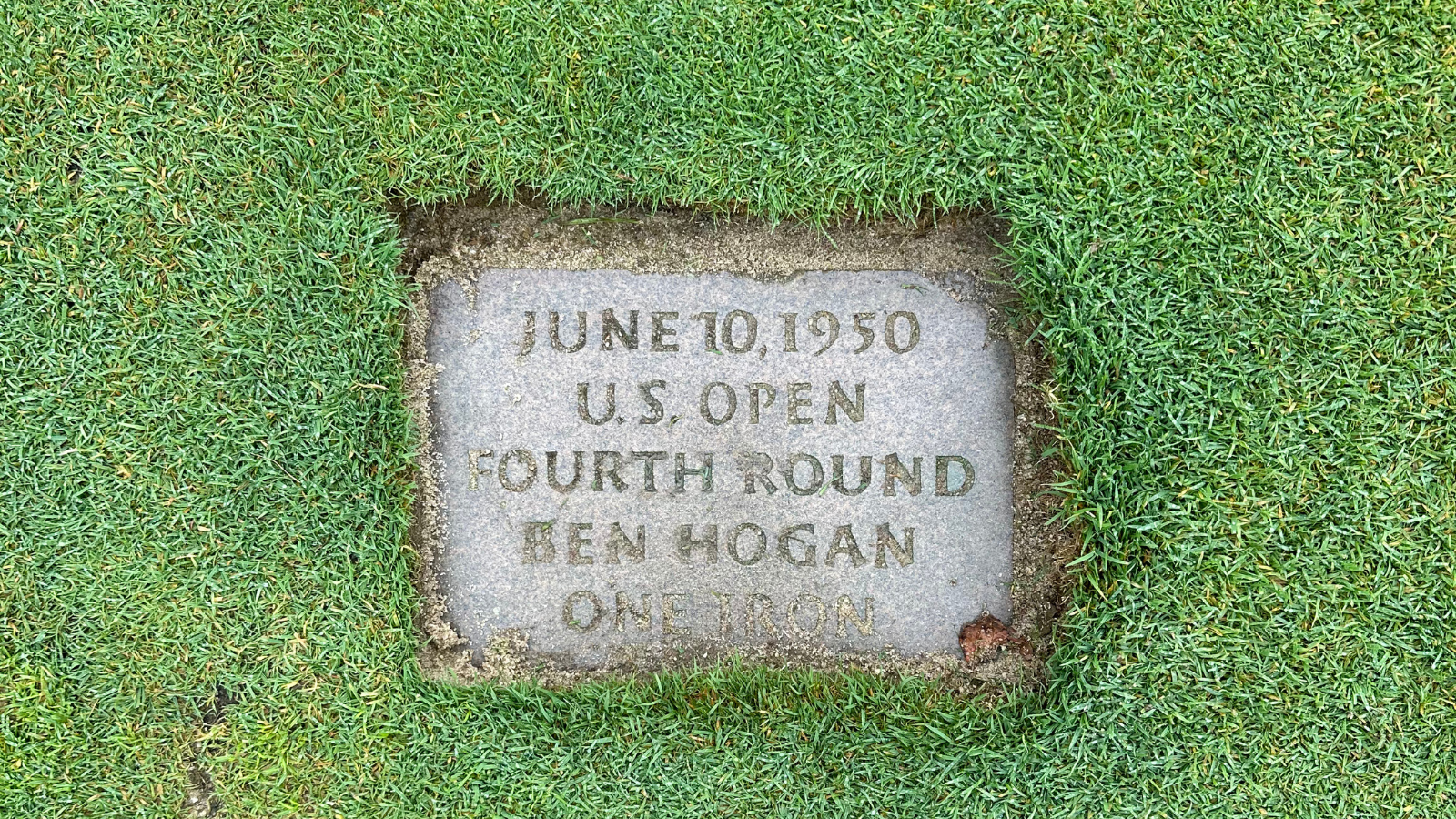
She sits on roughly 120 acres of clay-based, L-shaped, thoroughly ordinary Pennsylvania farmland. There are houses along the boundaries and a public road runs through it. There are no yardage markers on property and the caddies are expected to know the number anyway. You walk. There are no mulligans on the first tee and the 115 yard thirteenth has ruined more good rounds than most 470-yard par fours. We love it because Bobby Jones turned up as a 14-year-old in 1916, won the US Amateur there in 1924, and completed the Grand Slam on the eleventh green in 1930. Because Hogan hit that one-iron on the 72nd in 1950.
The point
Golf is full of what-ifs and stories with questionable sources or endings, but this one is true.
If Wilson sails on the 10th of April, Merion East still exists. But it exists as a promising, underbunkered, slightly awkward course on a cramped bit of clay with a road running through it, finished by somebody else, or by nobody. Perhaps no Grand Slam on the eleventh, and so on.
What saved it was a man on our shores deciding that a golf trip wasn’t finished yet.
So this week, while the world’s best amateurs are trying to keep it below the hole and out of the quarry, spare a thought for that letter in the archive room – proof of a ticket somebody didn’t use, that still gives me goosebumps to this day.